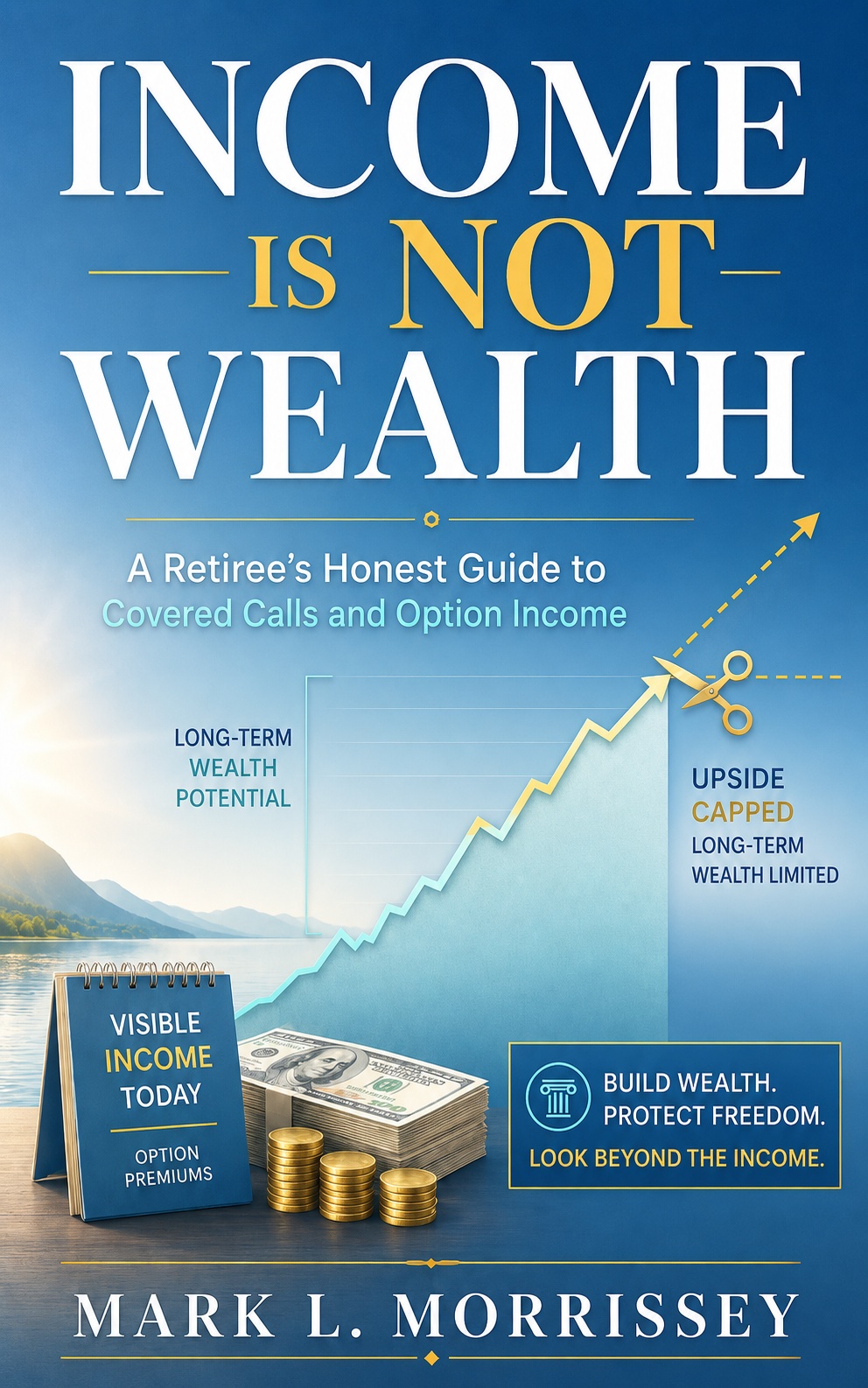
Plain-English guide
Retirees are often shown investment products with attractive yields: dividend funds, covered-call ETFs, option-income funds, real estate funds, preferred-stock funds, and other income vehicles. The promise is emotionally powerful because retirement spending requires cash.
But yield is not the same as return. Yield tells you what is being paid out. Return tells you what happened to your wealth. Those can be very different things.
If a fund pays 10% but falls 12%, the investor did not make 10%. If a fund pays 8% and loses 3% in price, the pre-tax total return is closer to 5%. If taxes reduce the spendable income, the result is lower still.
Why high yield feels safer than it is
Cash payments are visible. Price erosion is easier to ignore. A retiree may see monthly deposits and feel that the investment is working, even if the account value is slowly shrinking.
This is why high-yield products can be persuasive. They create a sense of income stability while leaving the investor to notice, much later, whether the capital base is holding up.
Working rule: Yield is a feature of the payout. Total return is the result of the investment.
A simple example
| Investment | Cash yield | Price change | Approximate pre-tax total return |
|---|---|---|---|
| Fund A | 10% | -8% | About 2% |
| Fund B | 4% | +5% | About 9% |
| Fund C | 0% | +7% | About 7% |
Fund A looks most appealing if you look only at yield. Fund B produced more total return. Fund C produced no income, but still grew wealth before taxes. The point is not that any one fund is better. The point is that yield alone gives an incomplete picture.
Where high yield can come from
A high yield usually comes from one or more sources. Some are ordinary. Some are risky. Some are misunderstood.
- Dividends or interest. Companies, bonds, or loans may pay income, but the principal value can still change.
- Option premium. Covered-call funds may receive premium by selling upside to someone else.
- Return of capital. A distribution may include money that economically resembles giving part of the investment back to the investor.
- Leverage or credit risk. Some funds increase yield by taking more risk.
- Realized gains. A fund may distribute gains from selling assets, which may not repeat.
None of these is automatically bad. The problem is buying a yield without understanding what created it.
Covered-call ETFs: a common example
Covered-call ETFs are a useful case study. They can produce attractive distributions by selling call options. The investor receives premium, but the fund may give up part of the upside when the underlying asset rises.
That can be a reasonable tradeoff if it is deliberate. It is not free money. The yield is compensation for selling a right to someone else.
That is why the better question is not, “How high is the distribution?” The better question is, “After the distribution, price change, taxes, and capped upside, is the total result attractive?”
Why retirees should be especially careful
Retirees face a different problem from younger accumulators. Spending needs are real, and sequence-of-returns risk matters. A strategy that looks good during calm periods may behave poorly if markets fall early in retirement or if the investment slowly erodes while withdrawals continue.
A high-yield fund may still have a role. The danger is using yield as a substitute for a withdrawal plan, a bond ladder, cash reserves, or a realistic portfolio-risk decision.
Important caution: If an investment is purchased mainly because the headline yield solves an emotional problem, slow down. The yield may be doing too much of the persuasion.
Five questions before buying a high-yield fund
- What has the total return been? Look at price change plus distributions over multiple periods, not just the current yield.
- Is the price or net asset value declining? A falling capital base can offset attractive distributions.
- What risk creates the yield? Is it credit risk, leverage, option premium, concentrated stocks, return of capital, or something else?
- What happens after taxes? A taxable distribution may be less attractive than it appears.
- What role does this play in the whole retirement plan? Is it a small income sleeve, a core holding, or a substitute for safer assets?
A better way to think about retirement income
Retirement income should be judged by whether it supports spending while preserving enough flexibility, liquidity, and long-term capital. That can include dividends, interest, option premium, bond maturities, cash reserves, selling appreciated assets, or systematic withdrawals.
The important distinction is that income is a method of cash flow. It is not automatically a measure of success.
The practical conclusion
High yield is not bad by itself. It is incomplete information. A retiree should ask what the yield costs, how the capital behaves, what the tax treatment is, and whether the whole investment improves the retirement plan.
The simplest test is this: would you still buy the investment if the yield were not displayed in large print? If the answer is no, the yield may be distracting from the real decision.