← Back to The Practical Retiree Lab
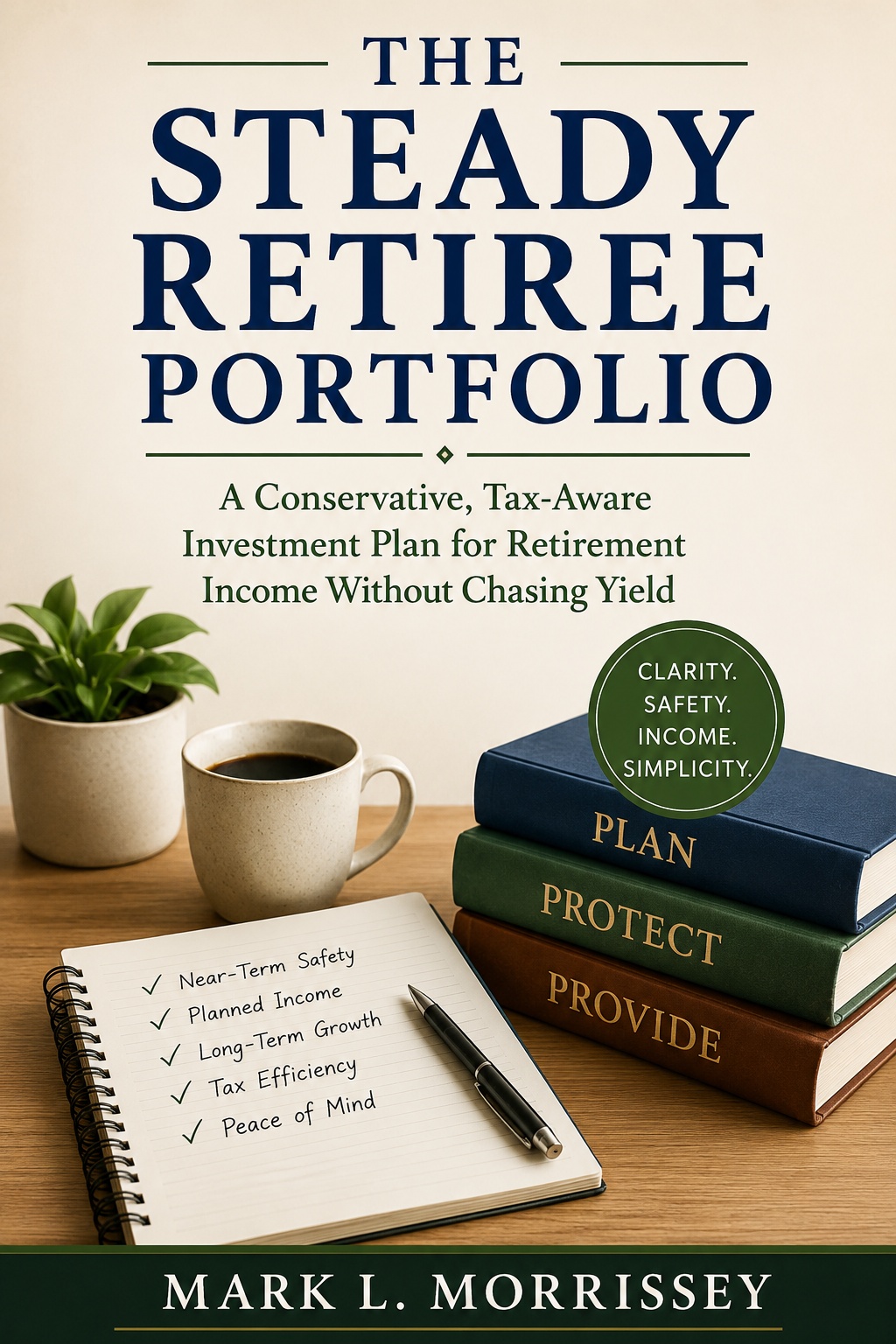
Featured retirement book
The Steady Retiree Portfolio
A Conservative, Tax-Aware Investment Plan for Retirement Income Without Chasing Yield
A plain-English framework for retirees and near-retirees who want dependable spending, tax awareness, inflation protection, financial organization, and a plan that can survive bad markets without reaching for high-yield promises.
Download Free PDF Summary Buy on Amazon Find your chapters Retirement Income HubASIN: B0H85P25RJ. The Amazon button uses the direct ASIN link.
Reader chapter guide
Find the chapters most relevant to your situation
This rule-based guide does not provide personal investment or tax advice. It simply points you to the parts of the book most likely to match the concern you choose.
Suggested starting point
Select your situation and concerns above. For example, a single retiree interested in RMD issues will usually start with Chapters 11, 10, 7, 8, 13, 18, and 19.
The basic argument
Retirement investing has a different job from accumulation investing. Once withdrawals begin, the portfolio may need to support current spending while also protecting against inflation, taxes, bad timing, and household confusion. The book organizes that job into near-term safety, planned income, long-term growth, and tax-aware maintenance.
It is intentionally skeptical of high-yield shortcuts. A large payout can be useful, but it is not the same as a safe or durable total return.
Build the paycheck before the product list
The book starts with how a retiree portfolio supports ordinary spending, large bills, and bad-market periods.
Coordinate accounts before RMDs arrive
Taxable accounts, traditional IRAs, Roth IRAs, capital gains, Roth conversions, and RMDs all affect the plan.
Make the plan understandable
The surviving-spouse test appears throughout the book: could another trusted person understand the plan if needed?
Who it is for
Retirees and near-retirees who want a conservative, understandable framework for spending, cash reserves, ladders, stocks, taxes, RMDs, Roth conversions, estate organization, and avoiding high-yield traps.
What it is not
It is not a model portfolio, market forecast, trading strategy, tax manual, or personal recommendation. It is a guide for asking better questions and organizing the retirement-income problem more clearly.
Full chapter list
- Introduction - The Retirement Portfolio Has a Different Job Now
- Chapter 1 - Retirement Investing Is Different
- Chapter 2 - Safety, Risk, and the Illusion of Certainty
- Chapter 3 - The Three Jobs of a Retiree Portfolio
- Chapter 4 - Cash, Treasury Bills, CDs, and the Near-Term Spending Reserve
- Chapter 5 - Building a Treasury or CD Ladder
- Chapter 6 - Why Retirees Still Need Some Stocks
- Chapter 7 - What Belongs in Taxable, IRA, and Roth Accounts
- Chapter 8 - Dividends, Interest, and Capital Gains
- Chapter 9 - Municipal Bonds: Useful, But Not Magic
- Chapter 10 - Roth Conversions and the Low-Tax Window
- Chapter 11 - Required Minimum Distributions
- Chapter 12 - Credit Cards, Debt, and Financial Housekeeping
- Chapter 13 - Trusts, Beneficiaries, and Leaving a Clean Financial Trail
- Chapter 14 - The Stuff Problem
- Chapter 15 - Why High Yield Is Usually a Warning Sign
- Chapter 16 - Covered Calls, Annuities, and Other Income Temptations
- Chapter 17 - What to Ask Your Financial Adviser
- Chapter 18 - A Simple Annual Retirement Portfolio Checkup
- Chapter 19 - Retiree Situations
- Chapter 20 - The Steady Plan You Can Actually Live With
Educational content only. This page, the PDF summary, and the book are not financial, investment, tax, legal, insurance, estate-planning, or fiduciary advice. Investment risks cannot be eliminated. Consult qualified professionals before making major decisions.